Unraveling Bitcoin Price, Miners And Bitcoin ATMs
Release Date: February 5, 2024

What is Bitcoin?
How to Buy Bitcoin?
History of Bitcoin Price
What is Bitcoin Halving?
Bitcoin Halving Dates Over The Past
What Happens With Bitcoins Going Half?
Why Have Halving Events Occurred Before 4 Years?
What Might Happen When No Bitcoin Is Left?
How Does Bitcoin Operate?
What Is Bitcoin Blockchain Technology?
How Bitcoin Mining Works?
History of Miners
How Do Blocks Work?
What Is Proof Of Work Mechanism?
How Much Energy Does Bitcoin Mining Take?
Who Created Bitcoin?
How Bitcoin Adopted Proof Of Work Mechanism
What Is a Bitcoin ATM?
Are There Different Types Of Bitcoin ATMs?
Do Banks Link With Bitcoin ATMs?
The History of BTC ATMs and Business Model
How Much Commission Is Possible With Bitcoin ATM?
What Is The Startup Cost Of Crypto ATM Business?
Is It Legal To Regulate Bitcoin ATMs?
Do Banks Allow Bitcoin ATM Transactions?
Where To Place The Bitcoin ATM?
Benefits Of Bitcoin ATM
What Are Crypto Wallets?
Non-custodial Wallets Or Exchange Wallets?
Choosing The Right Bitcoin Wallet
Predictions for Bitcoin in 2025, 2027 and 2030
How Much Is A Bitcoin Worth Now?
The Final Verdict On Bitcoin
Common Frequently Asked Questions (FAQs) About Bitcoin
Bitcoin has been present in the crypto market since 2009. Since its first debut, the coin has seen many moons of success. Getting success in the financial and technological world, the coin has gained numerous admirers and critics over the years. Meanwhile, crypto mining has seen innovations in hopes of mining Bitcoin. Crypto miners' technology has evolved from USB sticks to powerful mining rigs, and all these links back to Bitcoin mining. Meanwhile, BlockDAG has taken this evolution further beyond making the mining process energy-efficient.
To control the inflation of the crypto market, Bitcoin developers adopted an approach called Bitcoin halving, where block rewards for BTC are decreased every four years. This article covers all about Bitcoin from the best BTC wallets to price predictions and how Bitcoin investment can be fruitful. Learn all you need to know about Bitcoin price and Bitcoin mining machines. Without further delay, let's get started.
What is Bitcoin?
Bitcoin is the very first decentralised cryptocurrency. It is a digital asset that makes use of public-key cryptography to sign, record and send transactions over Bitcoin’s Blockchain. The decentralisation makes these processes free from any central authority or overlooker.
The Bitcoin Network was launched in January 2009, by an anonymous developer or a group of programmers. The owner of Bitcoin to this date is unknown but everyone is familiar with the BTC’s pseudonym of Satoshi Nakamoto. The network’s native crypto is called Bitcoin and is built on a peer-to-peer electronic payment system, which transfers this crypto over the internet and maintains its value like a store of gold and silver.
How to Buy Bitcoin?
Bitcoin just like any other cryptocurrency can be bought and sold at the price of its current value. But Bitcoin also offers the option to purchase it in fractions called Satoshi. Each Bitcoin contains nearly 100 million satoshis. A satoshi is the smallest fraction of Bitcoin and is made up of BTC divisible up to eight decimal places. This means anyone can buy a percentage of Bitcoin for as little as $1.
History of Bitcoin Price
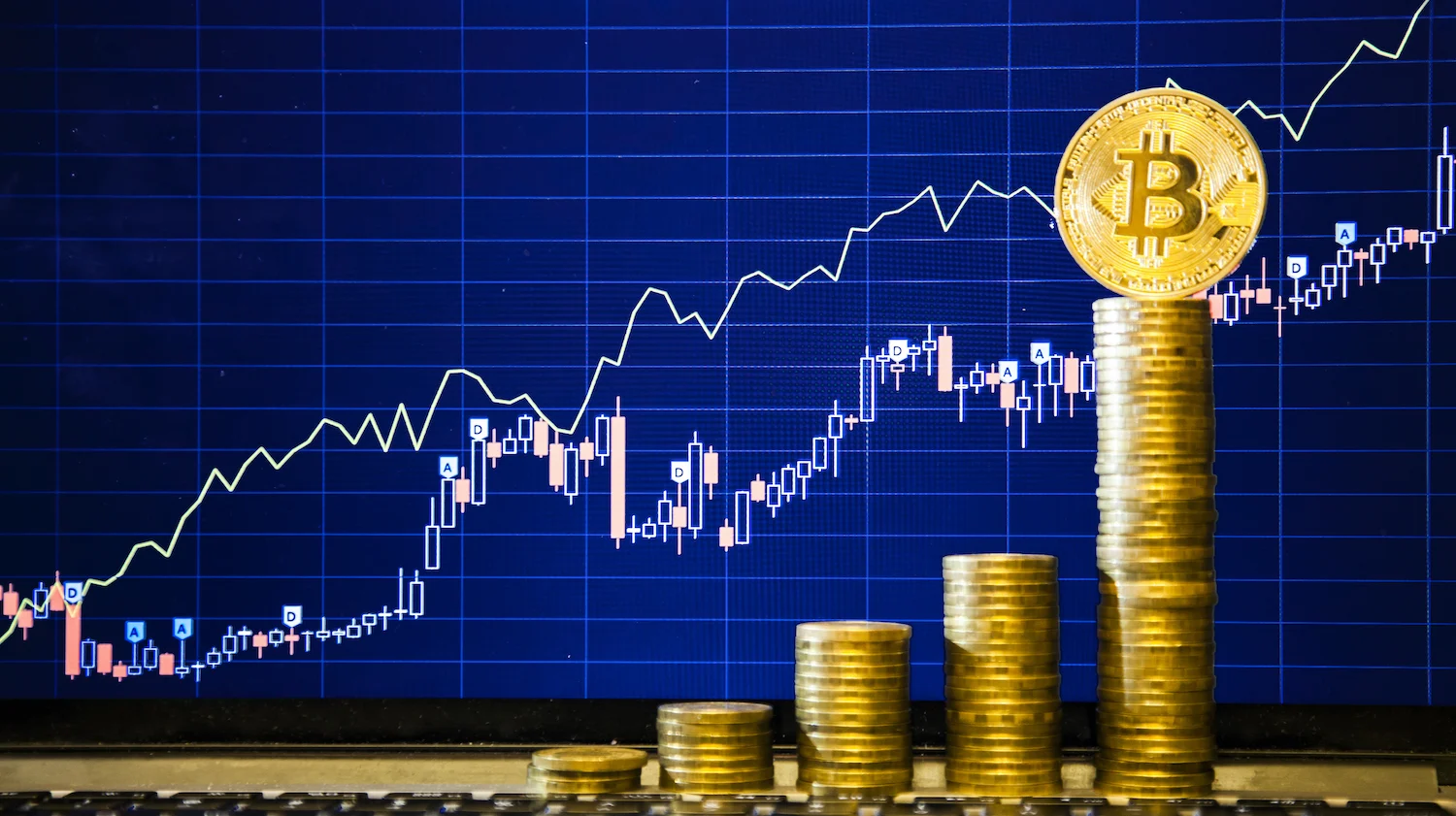
The history of Bitcoin price is known to be highly volatile, but even with that, it has been a top-performing asset of classes like commodities, bitcoin stocks, and bonds; while soaring a massive 9,000,0000% from 2010 to 2020. The crypto was launched in 2009, called Satoshi Nakamoto and was mined as Bitcoin Genesis Block (the first block on the Bitcoin blockchain). At that time, 50 BTC were circulated for $0.00 with every block created once every 10 minutes. However, this came to a stop with the first halving event which took place in November 2012.
What is Bitcoin Halving?
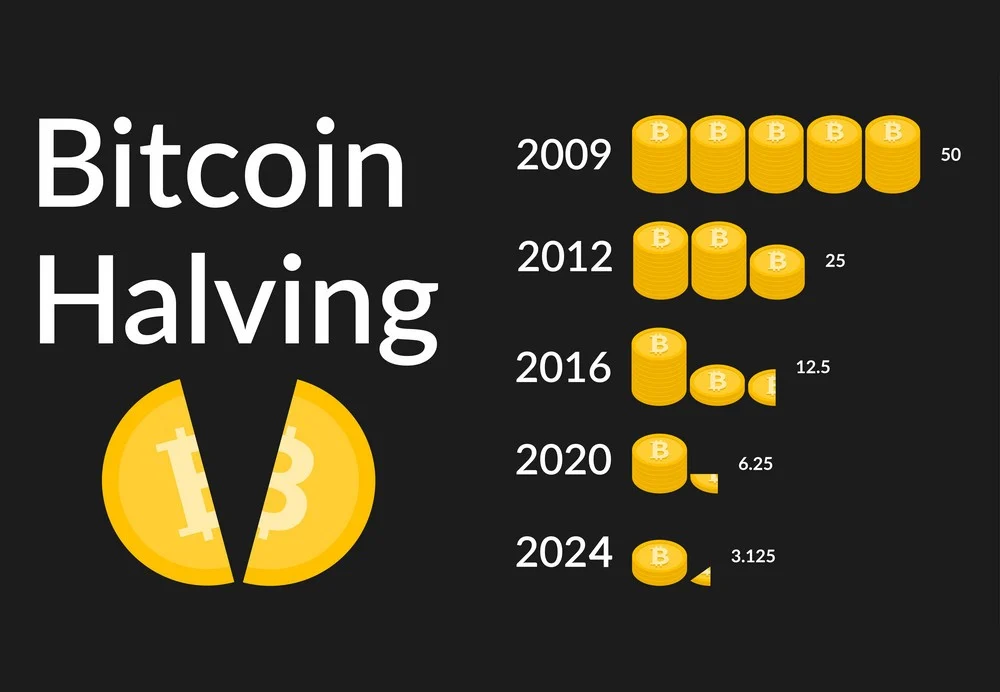
The halving event works like this, every four years or when 210,000 blocks are mined, the block rewards for Bitcoin miners are cut in half. It is called halving because the circulation rate of new BTCs is cut in half. As expected, the cutting event will continue till 2140 when the maximum limit of 21 million coins will be reached. When this happens, miners will earn for processing transactions, which will be paid by network users. The motive behind fees is that it will ensure the miners will take part in the upkeeping of the network.
The halving event is important as it marks another drop in the rate of new Bitcoins, as it comes near its total supply of coins. Back in 2009, each block reward contained 50 bitcoins on successful mining. On the other hand, in October 2023, nearly 19.5 million BTC were in circulation with only 1.5 million to be launched via mining rewards.
Bitcoin Halving Dates Over The Past
In total there have been three halving events till October 2023:
- November 28, 2021, the rewards were reduced to 25 Bitcoins
- July 9, 2016, the rewards were cut to 12.5 Bitcoins
- On May 11, 2020, the rewards were reduced to 6.25 Bitcoins
- The next Bitcoin halving event will take place on April 2024
What Happens With Bitcoins Going Half?
Theoretically, the event is meant to halve the Bitcoin rewards resulting in limited returns and likely to raise the demand for the coin.
Why Have Halving Events Occurred Before 4 Years?
The Bitcoin mining algorithm works in a way that it finds every new block once every 10 minutes. For some blocks, the time may be less or more than 10 minutes. The time to reach the next halving event could be decreased or increased. For example, when blocks are mined, with an average of 9.66 minutes it will take nearly 1,409 days to mine 210,000 blocks. This concludes to 1461 days, with one day added for the leap year.
What Might Happen When No Bitcoin Is Left?
Experts predict that the last Bitcoin will be mined in 2140, if the blocks are halved for every 210,000 blocks the rewards will decrease to one satoshi as the coin will near its maximum supply. One satoshi is 0.00000001 Bitcoin, while a satoshi is the smallest fraction of Bitcoin that cannot be halved. In that case, one satoshi might remain the reward till a total of 21 million Bitcoins are mined. This could mean millions of satoshi might be rewarded after 2140.
In February 2011, the BTC price was at par with the U.S. dollar for the first time. Hitting this milestone gave way for investors to enter the market, and for the next four months, the price of Bitcoin gained value and soared to more than $30. At the start of 2013, the top crypto after facing a long downward trend saw a peak in value rising above $1000, but only for a brief period.
After the well-known Mt Gox hack, China announced its first ban on crypto and others, after the event BTC price took nearly four more years to return to $1,000 again. Once the leading crypto broke this barrier, the coin surged drastically till 2017 and peaked at an all-time high value of $19,850.
Over 2018, the entire crypto market dipped into what is now called the “crypto winter”, a bearish market throughout the year. However, in December 2020, Bitcoin once again gained momentum and broke its all-time high, the coin eventually soared 239% in 119 days and hit a new record price of $64,799.
How Does Bitcoin Operate?
Bitcoin and other cryptos can said to be like emails of the financial world. The currency is not in a physical form and the cryptos are transacted between the receiver and the sender without the banking sector to entertain the transaction. Everything happens inside a distributed ledger called blockchain which is publicly available while being immutable and transparent.
What Is Bitcoin Blockchain Technology?
- Bitcoin transactions are available publicly over a distributed ledger called blockchain, which can be downloaded and maintained by anyone.
- Transactions take place between sender and receiver without intermediaries.
- Holders have full control over their Bitcoin storage. Each holder has a cryptographic key making it impossible to breach without the key.
- Bitcoin has no physical form whatsoever.
- Bitcoin boasts a fixed supply of 21 million. No additional BTC can be made and no amount of it can be destroyed.
- The transaction of sending and receiving coins over the network is done via public key information attached to the digital wallet of every person.
How Bitcoin Mining Works?
The people verifying the transactions over the network are called miners and the technology used is called crypto mining rigs or crypto miners. To encourage these crypto miners to do Bitcoin transaction verification, a fee is included with every transaction. The fee or the block reward is given to the crypto miner to verify the block added to the network. The greater the reward the higher the chances of the transaction to get processed first.
Every Bitcoin transaction has to be permanently committed to the Blockchain ledger via a process called mining. Bitcoin mining is the process where crypto miners use specialised computer technology called application-specific integrated circuit (ASIC) chips to unlock the next block in the chain.
Without miners, the mining process is incomplete, as every miner offers its unique features and has its limitations in mining cryptos. Blockchain calculations can be performed quickly using these mining rigs. Moreover, the evolution of miners over the years can be found below to understand the capacities of each mining machine.
History of Miners
CPU Miner
Bitcoin mining started with CPU mining back when there were not many miners. According to statistics, Satoshi, the BTC inventor and his friend Hal Finney were only a few people mining Bitcoin with their PCs. The mining difficulty was pretty low back in 2009, as Bitcoin became famous people started to look into powerful mining solutions.
GPU Miner
The graphic processing unit GPU was a special component added to mining solutions to handle greater complex calculations. GPUs were used for gamers to run computer games with peak graphics requirements. Due to the mechanism GPUs offered, they became popular in cryptography, and in 2011 the technology was adopted by Bitcoin miners. For comparison, the mining power of one GPU was more than 30 CPUs.
FPGA Miner
FPGA also called field-programmable miners are linked to a computer to solve a set of calculations. They operate like GPUs but are 3 to 100 times faster. However, the drawback of this technology came with configuring the hardware, the only reason why they weren't commonly used in Bitcoin mining.
ASIC Miner
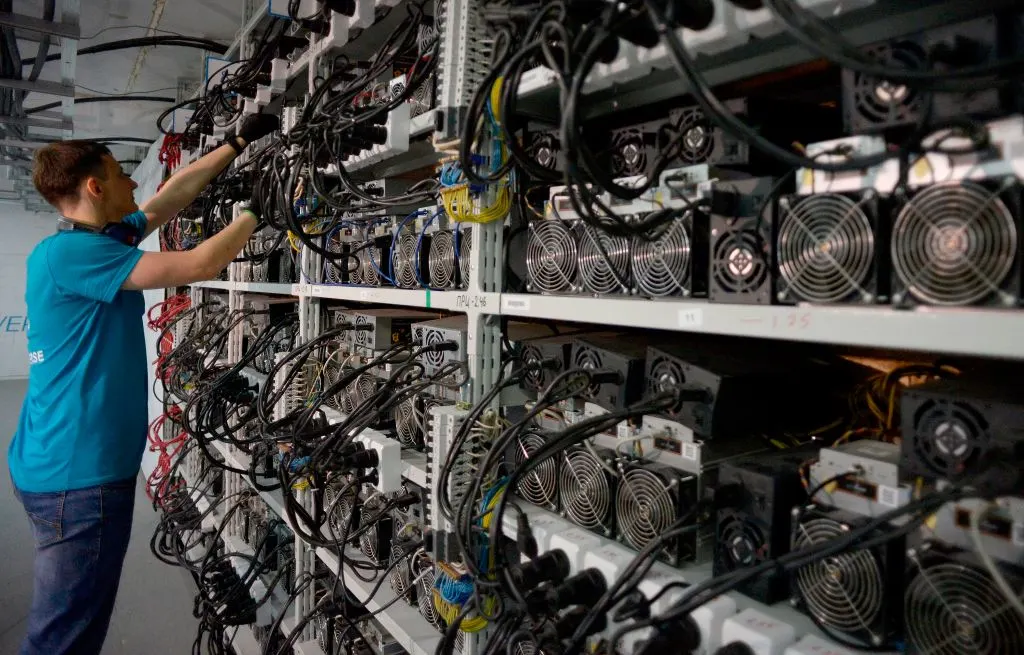
In 2013, a new technology was introduced to Bitcoin mining called the ASIC miner. ASIC is short for Application Specific Integrated Circuit, ASICs are still relevant to this day and manufactured for crypto mining. Where CPUs, GPUs, and FGPAs can be used for multiple purposes, ASICs can't be used for anything except crypto mining. The purpose of these miners was embedded in crypto mining and is still used today.
ASIC miners were introduced in the form of USB, but that idea didn't last long and quickly became obsolete. Even with the launch in 2013, the technology was quickly upgraded when new and better miners made their way to the market every six months. After 2016, the pace of new miners coming out slowed down considerably and the updating race finally faced a technological barrier. Moreover, what started with USB mining rigs with a fan on top finally evolved into fully functional mining machines.
How Do Blocks Work?
Crypto mining operates on a system called cryptographic hashing, the function simply takes any input messages, data or any kind of words and transforms it into a fixed-length alphanumeric code called the hash. Every input makes a unique hash, it is nearly impossible to predict; what kind of input will make these specific hashes. Even an alteration of a single character of input will result in a completely different fixed-length code.
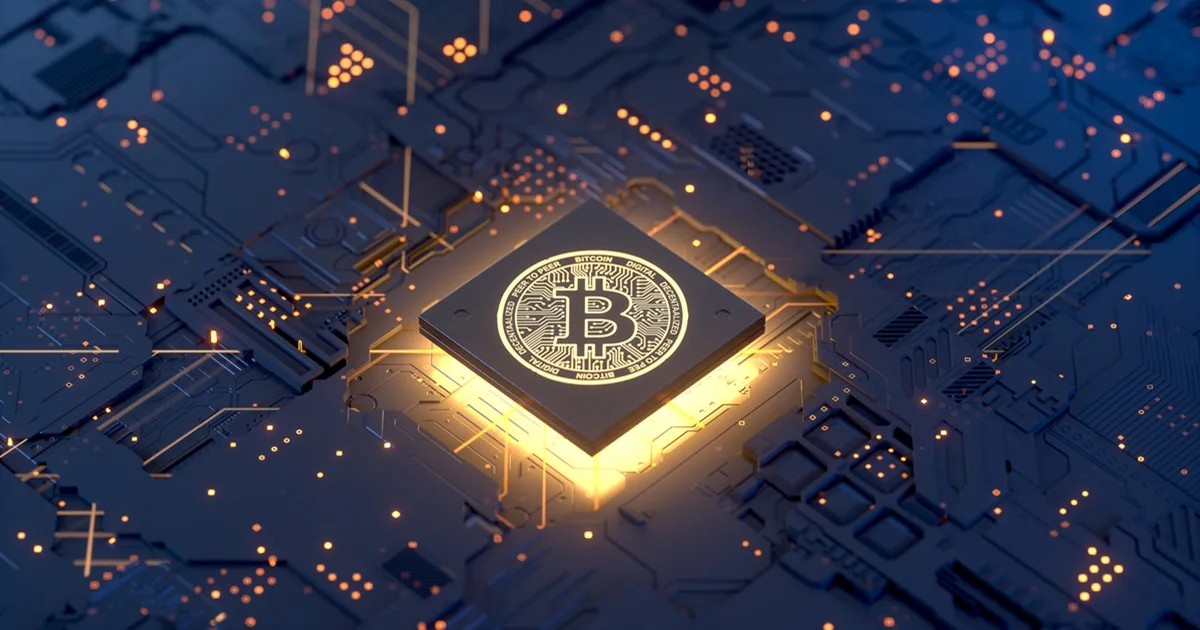
Every single block contains a value called a “target hash”. To successfully win the next block, miners need to produce a hash that is equal to or lower than the numerical value of the target hash. As hashes are randomly generated, it is just a matter of error and trial until one miner successfully predicts the hash. This common practice is used in the Proof of Work mechanism.
What Is Proof Of Work Mechanism?
The process of miners using machines and spending time and energy to achieve the desired results is called the proof of work system. The PoW is designed to block malicious agents from spamming or infecting the network. A new block is found nearly once every 10 minutes. If a miner successfully unlocks the next block he gets Bitcoins in return known as block rewards, and gets to add the number of transactions to the new block. Furthermore, the miner earns transaction fees attached to the transaction, which they add to the new block.
How Much Energy Does Bitcoin Mining Take?
Despite being a revolutionary technology in the world of digital assets the proof of work mechanism requires time and resources to create new blocks and ensure the security of the network. However, that security comes with a hefty price tag, in 2021 Bitcoin network consumed 93 terawatt hours (TWh) of electricity per year, which is as much as the 34th largest country in the world.
The appetite for electricity drew widespread attention from celebrities like Tesla CEO Elon Musk including government bodies like China’s State Council and the U.S. Senate, over the impact of Bitcoin on climate change. Although the numbers are high in terms of electricity consumption, it is important to note that Bitcoin mining at max equals 1.29% of any country’s energy consumption.
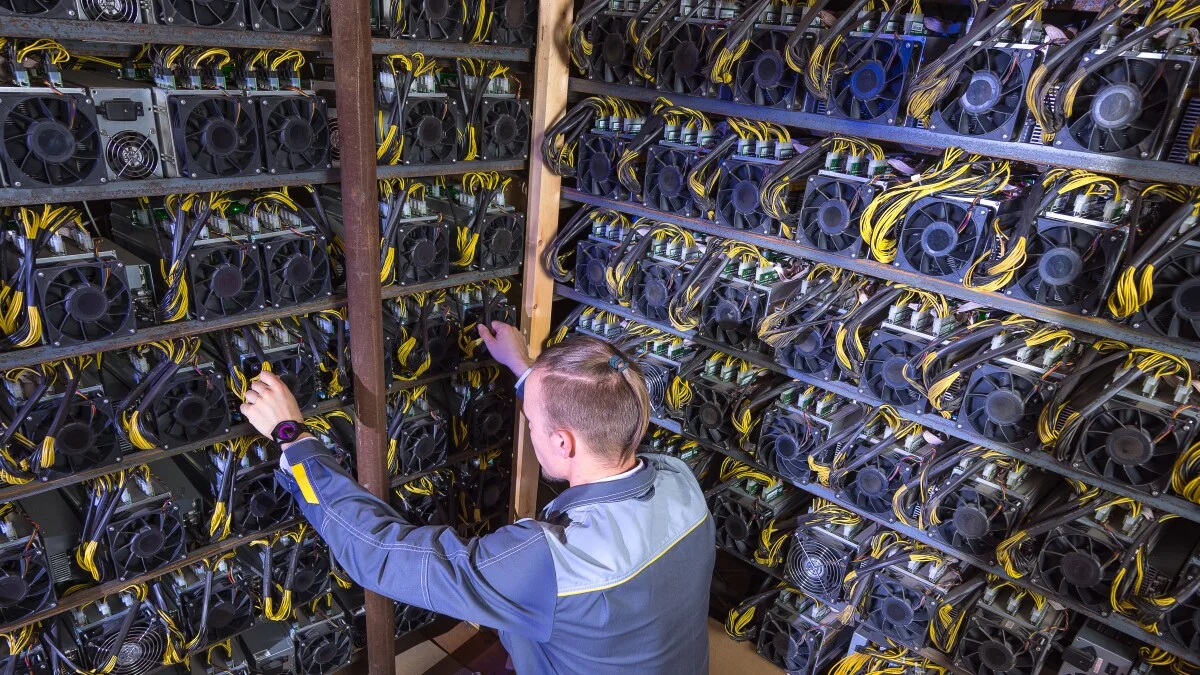
Note that, Bitcoin is an absolute financial system; its energy consumption can be tracked and measured, unlike other fiat systems which are not measurable accurately. These systems need additional layers like ATMs, card machines, security vehicles, bank branches, huge data centres and storage facilities. Numerous initiatives like the Bitcoin Mining Council, aim to improve the carbon footprint of Bitcoin by encouraging miners to use renewable energy sources.
Who Created Bitcoin?
As mentioned, the Bitcoin network was developed by a pseudonymous individual or group known as Satoshi Nakamoto. During the early time of development, many other developers joined the network to work on the protocol such as software developer Gavin Andresen, cryptographers Wei Dai and Nick Szabo and cypherpunk Hal Finney.
Numerous developers also joined the network like Peter Todd and Pieter Wuille who helped in the development of Bitcoin Core, the first client on its network. A client is a software that allows a network participant to run a node and connect to the blockchain.
To back the BTC, the Bitcoin Foundation, an American nonprofit organization was founded in 2012 to aid the adoption and development of Bitcoin protocol. However, after three years of operations, the foundation ran out of funds and was dissolved.
How Bitcoin Adopted Proof Of Work Mechanism
In 2014, Adam Back creator of Hashcash and a cypherpunk, co-founded BlockStream. Haschash, a cryptographic hashing algorithm was developed in 1997, which used the same proof-of-work mechanism later adopted by Bitcoin. Blockstream was a for-profit tech firm that built new infrastructure on the Bitcoin network, as well as sidechains and Lightning Network. The innovation in the BTC blockchain gave birth to Bitcoin ATM.
What Is a Bitcoin ATM?
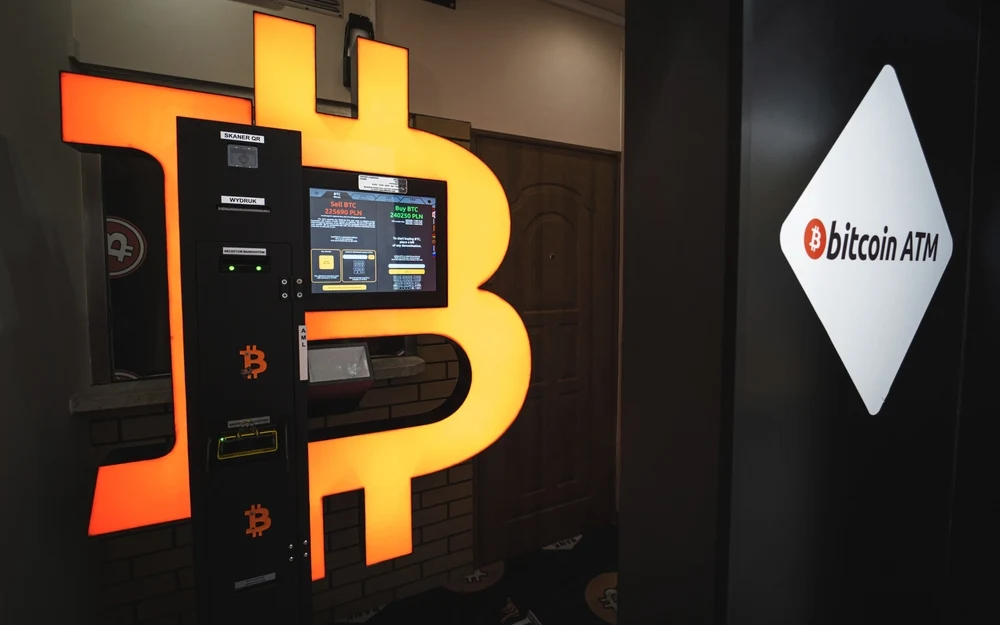
Cryptocurrency as a mode of payment is getting accepted by merchants and vendors across the world. Due to such reasons, Bitcoin ATMs are becoming an easy way for customers to sell and purchase Bitcoin. A lot of start-ups are now offering Bitcoin ATM Machines installation services which allows entrepreneurs to purchase and sell BTC and other cryptos.
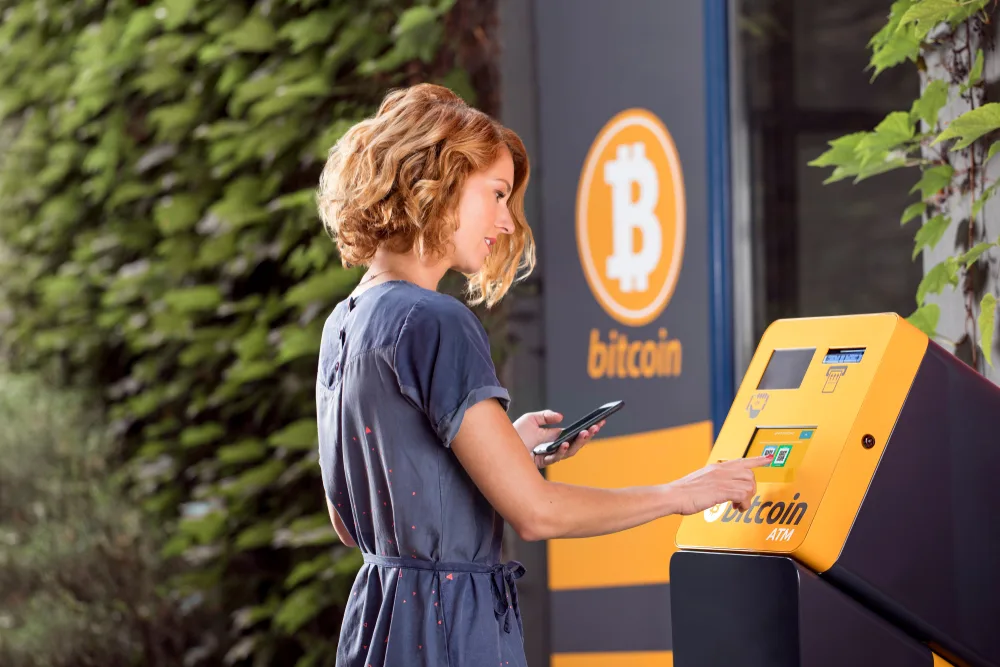
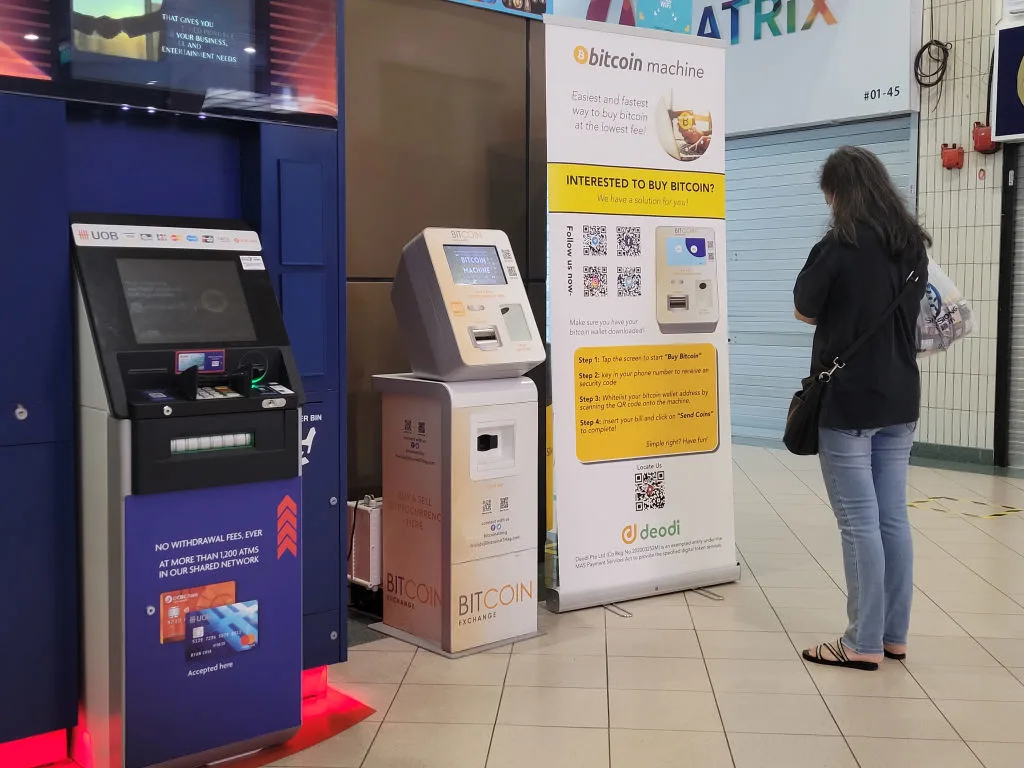
Just like any other ATM, Bitcoin ATMs are physical machines that give access to exchange and transfer cryptos. The machines are made for public use allowing users to buy crypto using fiat currencies. Meanwhile, some technologies like Cloud ATM allow users to convert Bitcoins kept in a digital wallet to cash.
Are There Different Types Of Bitcoin ATMs?
Currently, there are two types of BTC ATMs, Bidirectional and Unidirectional. With Bidirectional ATMs users can purchase and sell cryptos in exchange for fiat currencies, while Unidirectional ATMs can only be used to buy Bitcoins.
Do Banks Link With Bitcoin ATMs?
BTC ATMs are not connected to any financial institution or standard bank. Instead, the internet kiosk links to the user’s digital wallet and crypto exchange where the BTCs can be sold or purchased. Using BTC ATM requires verification of identity via 2FA (two-factor authentication). Once logged in, the user can buy or sell Bitcoins for cash (depending on the machine’s currency acceptance). The transactions are commonly receipted on a QR code attached to the digital wallet.
The History of BTC ATMs and Business Model
The BTC price saw a tremendous increase in value over time. The popularity developed a user demand to pay for goods and services with cryptocurrencies. In the early days, many adopters allowed the creation of business-to-consumer machines to fulfil the purpose while taking benefit from the lower transaction costs. Physical ATMs opened doors for entrepreneurs and gave way to new income sources, while users exchanged Bitcoin and cryptos with fiat money. This led BTC ATMs to be soon seen in gas stations, casinos, gas stations and grocery stores.
How Much Commission Is Possible With Bitcoin ATM?
Bitcoin ATM entrepreneurs generally get up to 5-10% commission on every transaction, meanwhile, transaction amounts can go up to $30,000 per month.
What Is The Startup Cost Of Crypto ATM Business?
Cost is usually dependent on state regulations, location, and type of machine bought. BTC ATMs can have a worth of more than USD 10,000. Stock liquidity is also needed for every exchange as this includes fees when making transfers and paying for legal licensing fees.
Is It Legal To Regulate Bitcoin ATMs?
Cryptos are not included in the legal tender, hence they are not a part of the monetary jurisdictions. Bitcoin ATMs fall under payment services and are observed under BSA, MSB, and AML compliance rules. FinCen from the U.S. Treasury Department monitors these regulations, however, for additional needs of BTC ATM check with the local government requirements.
Do Banks Allow Bitcoin ATM Transactions?
As Bitcoin is decentralised, banks limit the business dealing with Bitcoin ATM owners. To get started one must search for banks allowing link up with the owner’s Bitcoin wallet. Why? Because the digital wallet will be needed to make the conversion of Bitcoin to cash and vice versa as consumers make the exchange.
Where To Place The Bitcoin ATM?
Location is the key factor in making profits when it comes to Bitcoin ATMs. It is wise to install the ATM in areas with high foot traffic and consider paying rent to install the machine. Popular spots include
- Pizzerias/Restaurants - 12%
- Gelateria/ Coffee Shops/Cafes - 9%
- Shopping Malls - 7%
- Company Office/ BTC Embassy - 7%
- Deli/ Food Store/ Supermarket - 6%
Benefits Of Bitcoin ATM
- Higher Foot Traffic: If you install a BTC ATM in an existing business of your own, expect the sales to rise. You open a door for crypto users while gaining new customer engagement.
- Higher Revenue: You can get a reasonable fee on every single transaction when compared to common ATMs, without paying any higher cost to banks, or financial institutes.
- Convenience For Customers: Provide quick financial transactions to customers earning their trust while giving them proper privacy. The higher trust levels combined with convenience will increase earnings from transactions and overall traffic to the location.
- Support For Bitcoin And The Cryptocurrency Community: Bitcoin follows a decentralised system. Installation of Bitcoin ATM gives access to a broader community to get crypto benefits like reduced fees, enhanced privacy, higher liquidity and higher global transactions. To operate a BTC ATM a crypto wallet is needed, which is explained below.
What Are Crypto Wallets?
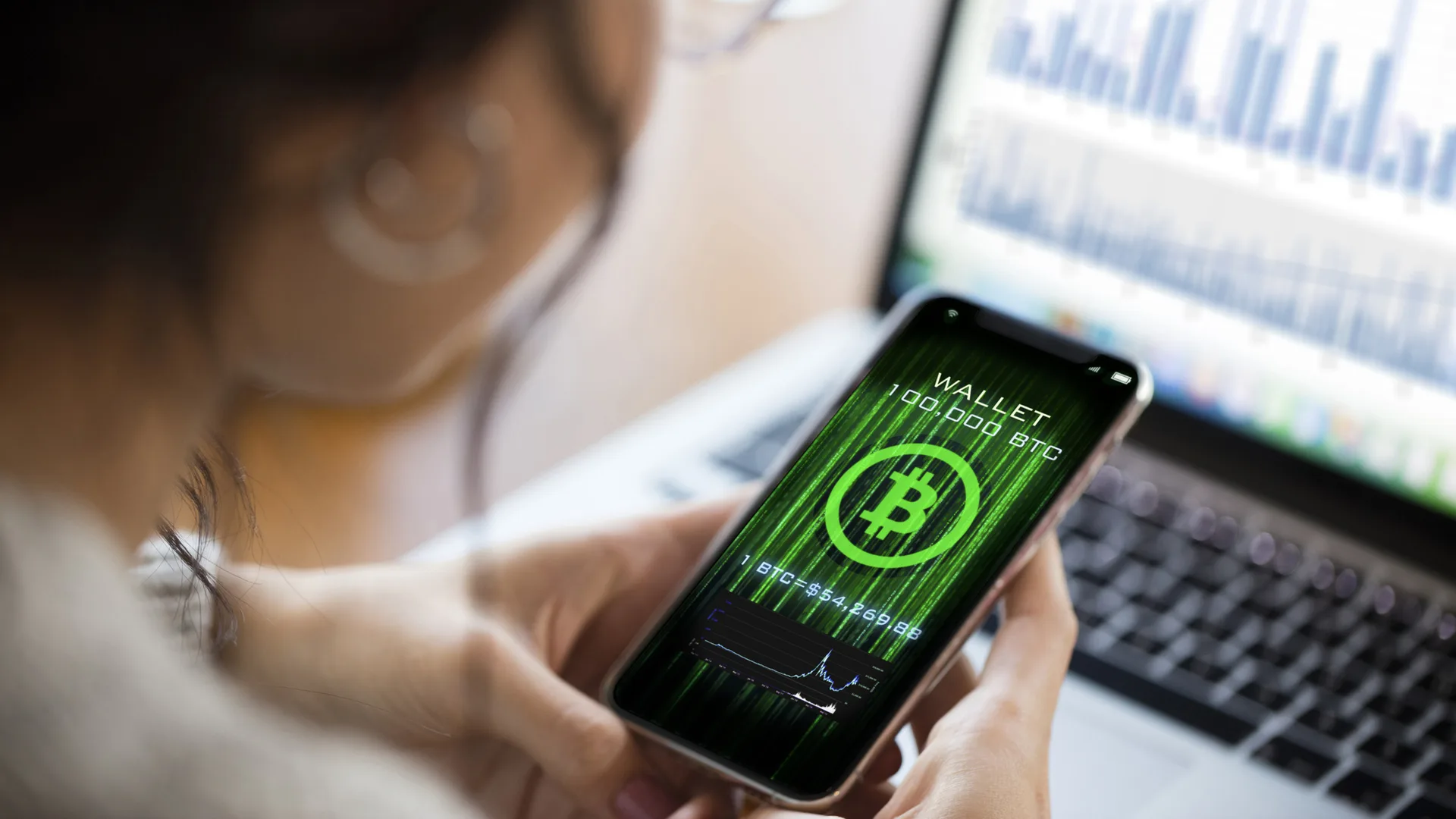
Crypto wallets are available in many forms but all serve a basic purpose to safeguard secret information that allows control over a user’s digital assets. Making such an important decision can't be left to choice, as losing access to your private keys isn’t recoverable and can result in losing all your crypto assets.
Non-custodial Wallets Or Exchange Wallets?
Non-custodial wallets are a storage option preferred by numerous crypto owners that gives complete control over one’s confidential data. On the contrary, when assets are kept in a cryptocurrency exchange, you don't have to trust a third party to protect your private keys. The breakdown of platforms like BlockFi and FTX left customers wondering if their funds have been lost forever, these raised concerns over whether leaving your crypto in the hands of others is safe or not.
This doesnt mean that non-custodial wallets don't have any risk. If you lost your passwords, good luck recovering them. Moreover, most of the time you are dependent on the software and hardware to operate like they should. Transferring assets from one wallet to another can also become a costly method due to the transaction fees incurred by underlying blockchains. This becomes the number one reason for crypto users to keep multiple wallets, with some maintaining them for the long term and others for day-to-day trading.
One way to check a wallet is by going through the crypto’s website you are willing to store. A lot of wallets are built for only one cryptocurrency making the storage easy and quick. If you are looking to keep multiple cryptos in one wallet it is a good idea to have a look around. Going through the information below you can decide which one will fit you perfectly.
Choosing The Right Bitcoin Wallet
If you are going to use a non-custodial wallet the first thing to ask is if you need a cold wallet or a hot wallet. Such terms might seem unusual, but the core difference between both is whether it is internet-connected or not.
- A hot wallet is the one that connects to the internet. These wallets are commonly free to use, allowing added-on services like staking or trading for a fee. A hot wallet generally makes it easy for transactions using crypto, but this makes it highly vulnerable to online threats like hacks which might take place over the internet.
- A cold wallet does not require an internet connection. These wallets require money to operate, as you are buying actual hardware to store crypto. As these wallets aren’t connected to the internet, they might be difficult to breach by other users. However, if the device is lost, the recovery becomes difficult.
Predictions for Bitcoin in 2025, 2027 and 2030
Bitcoin has been gaining popularity and more financial institutions are acknowledging the coin’s success. The recent Bitcoin ETF approval has further piqued the interest of investors from all over the world. Let us have a look at how Bitcoin price might perform in the upcoming time.
Bitcoin Price Prediction 2025
For 2025, the year might change the direction of the Bitcoin price hovering above $75,000 with the current bull market trend. The prolonged bearish trend might lead to a greater price drop going half the previous value by the year’s mid. The downward trend will likely make the Bitcoin price between $65,000 and $68,000, going down over the year. At the end of the year, the BTC could land somewhere at $55,500 to $58,800 displaying a bearish market trend.
Bitcoin Price Prediction 2027
By 2027, Bitcoin price might see stability and recover from the bearish crypto market. The lower selling activity might result in a bull run to jump back from the red trend. Meanwhile, seeing a downfall over 2026 might result in the Bitcoin value going beyond $50,000, and standing between $53,300 and $54,900.
Bitcoin Price Prediction 2030
In 2030, Bitcoin could be seen in an upward trend crossing the $100,000 mark and making a new all-time high record. The position might be temporary but will lay a solid base for positive gains. Moreover, the coin might hover between the range of $108,000 to $110,000. However, the success might cause a negative response in the market; dragging the coin’s trading between $105,000 and $106,800.

How Much Is A Bitcoin Worth Now?
With the entry of February 2024, the current Bitcoin value stands at nearly $43,000. Looking at the surge of the crypto leader over the last six months many wonder if, is bitcoin a good investment. In simple words, the answer is it could be, due to its complex nature why because it is a highly volatile market. On researching investors will find the Bitcoin chart with sharp drops and peaks over the years. The coin has a total market capitalization of $847.01B, in 2023, Bitcoin saw a change of $1.71% in its market value. Meanwhile, under CoinDesk Bitcoin is classified as a Digital Asset Classification Standard (DACS).
In the first quarter of 2024, Bitcoin has maintained an average value of $42,500 resulting from the ETF approval. With the halving event coming up in the second quarter of 2024, the BTC price might reach new peaks which will ultimately depend on the macroeconomic factors and global market affecting its price. With time a hike in the BTC price will also increase the price for BlockDAG coin. Although, currently available as presale, the BDAG crypto is set to do wonders in the world of mining and crypto innovation.
The Final Verdict On Bitcoin
Bitcoin has seen its success over the years and will likely continue to see its growth in the upcoming years. With the last BTC fraction to be mined in 2140, the coin’s glory will outlive many active crypto enthusiasts, for now, we can only predict the next decade of Bitcoin as only one decade has already gone. Moreover, the evolution of Bitcoin mining with the introduction of Bitcoin ATM further adds to the horizon of the leader crypto. As of now, we can only sit back and see where this crypto world might take us with its current market capitalization of $1.7 trillion. And observe how it might affect the overall financial market.
Common Frequently Asked Questions (FAQs) About Bitcoin
Who Controls And Regulates Bitcoin?
Bitcoin runs under the pseudonym of Satoshi Nakamoto, so it is not known who regulates BTC.
Is Bitcoin Cash The Same As Bitcoin?
Bitcoin Cash is a crypto built on the Bitcoin Network fork. A fork is built when users reprogram the network to operate it the way they want.
Is Bitcoin A Good Investment?
It depends on the investor’s capacity to invest, as it is a highly volatile market.
How Long Does It Take To Mine One Bitcoin?
Bitcoin mining can take 10 minutes to 30 days depending on the equipment used for mining.
How Can I Buy Bitcoin?
Bitcoin can be purchased like any other cryptocurrency over exchanges.
Can I Buy Bitcoin Without A Wallet?
No, Bitcoin cannot be purchased without a wallet. A crypto wallet is necessary to store the private keys associated with digital assets.
Where Do I Keep My Bitcoins?
Bitcoins can be stored in an exchange or a crypto wallet.
Is It Easy To Mine Bitcoin?
Bitcoin Mining is a power-hungry process that needs high-tech equipment. Over the years the competition to mine Bitcoin has increased, resulting in higher difficulty. So it is not easy to mine Bitcoin and the process is pretty complex.
How Do I Start Trading In Bitcoin?
To get started with BTC trading one must at least buy some BTCs or Satoshis to start trading in Bitcoin.
About the Author

ARTICLES
Latest Posts

BlockDAG Confirms It Has No Operational Presence in Seychelles
BlockDAG confirms it no longer operates in Seychelles. Learn about its current business structure, transparency measures, and official statement.
Read MoreDogecoin ETF Countdown: Bitwise Filing Marks a Major Milestone
Bitwise’s DOGE ETF filing signals a major milestone, fueling anticipation in the crypto market’s Dogecoin journey.
Read MoreTop Trending Crypto 2025 List: What’s Popular in Crypto Now?
Discover the top trending crypto 2025 list. Explore what’s popular in crypto now, from leading coins to emerging projects shaping the market.
Read MorePudgy Penguins (PENGU) Price Prediction & Analysis 2026–2050
Explore Pudgy Penguins (PENGU) price history, analysis, and forecasts from 2026 to 2050, including predictions, trends, and next bull run insights.
Read MoreInjective (INJ) Price Prediction 2025‑2050 & Next Bull Run
Explore Injective (INJ) price predictions for 2025‑2050, past price history, all‑time high analysis, and insights for the next bull run.
Read MoreBitget Token (BGB) Price Forecast: 2025, 2030, 2040, and 2050
Get BGB token prediction through 2025, 2030, 2040, and 2050, analyzing potential growth, challenges, and the broader crypto market outlook.
Read More